Idioms for Beach With Meanings | Sea & Shore Expressions

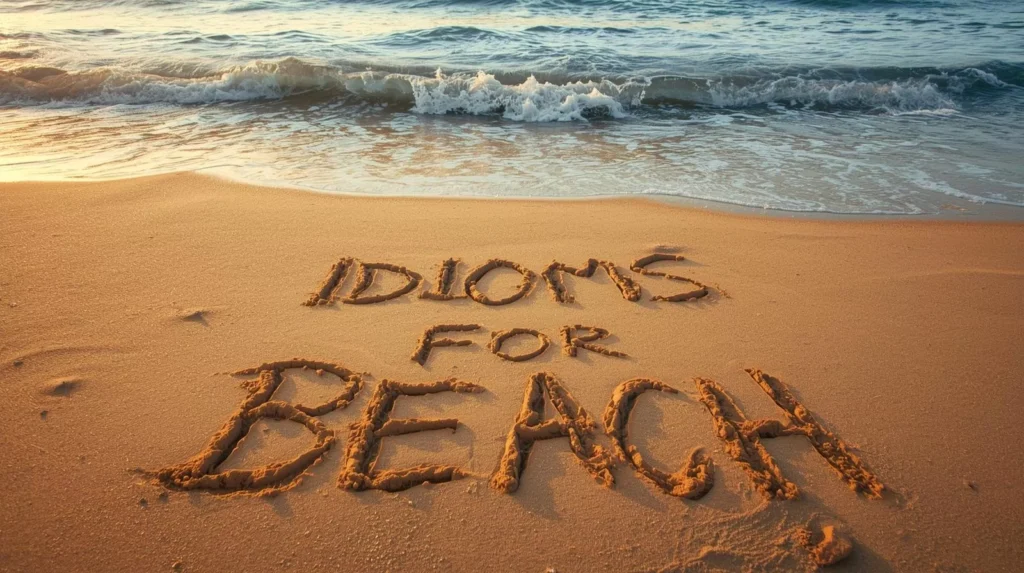
Beach idioms bring the spirit of the shore straight into our language. Just as the beach is a place of calm waves, warm sand, and endless horizons, these expressions add color and clarity to the way we speak. Whether we say someone is “making waves,” “casting a wide net,” or “going with the tide,” beach idioms help us describe life’s ups and downs with vivid imagery and playful charm. They connect everyday experiences to the sea’s rhythm, reminding us of freedom, adventure, and the ebb and flow of life.
What Are Idioms for Beach?
Idioms for the beach are expressions that use imagery from the sea, sand, and shoreline to describe everyday situations in a creative way. These idioms don’t refer to the beach literally, instead, they use beach-related words like waves, tides, nets, or the ocean to express feelings, actions, or challenges. For example, phrases such as “ride the wave” or “make waves” help us talk about momentum, change, or causing a stir. Beach idioms add color, energy, and a sense of movement to language, making ordinary ideas more vivid and memorable.
Everyday Used Idioms for Beach
- Make waves
Meaning: Cause a disturbance or attract attention.
Example: She made waves at work by suggesting a new system. - Ride the wave
Meaning: Take advantage of a growing trend or good moment.
Example: The company rode the wave of online shopping success. - Go with the tide
Meaning: Follow the natural flow of events.
Example: He decided to go with the tide and accept the changes. - Cast a wide net
Meaning: Try many options to increase your chances.
Example: They cast a wide net when looking for new talent. - Be at sea
Meaning: Feel confused or lost.
Example: I was completely at sea during the math lesson. - Throw something overboard
Meaning: Get rid of unnecessary things.
Example: We threw overboard old plans that didn’t work. - A drop in the ocean
Meaning: A very small amount compared to what is needed.
Example: His donation was helpful but just a drop in the ocean. - Smooth sailing
Meaning: Easy progress without problems.
Example: Once the plan was finalized, it was smooth sailing. - Jump ship
Meaning: Abandon a project or team.
Example: Several employees jumped ship before the merger. - Bury your head in the sand
Meaning: Avoid facing a problem.
Example: You can’t bury your head in the sand forever about debt. - On the shore of something
Meaning: About to begin a new phase.
Example: She felt on the shore of a new career opportunity. - Between the devil and the deep blue sea
Meaning: Stuck between two bad choices.
Example: He was caught between the devil and the deep blue sea. - Sink or swim
Meaning: Succeed or fail without help.
Example: The new interns were left to sink or swim. - Lost at sea
Meaning: Emotionally distant or unfocused.
Example: He’s been lost at sea since the breakup. - Take the plunge
Meaning: Make a bold decision.
Example: She finally took the plunge and opened her own shop. - A rising tide lifts all boats
Meaning: Improvements benefit everyone.
Example: Economic growth is proof that a rising tide lifts all boats. - Test the waters
Meaning: Try something cautiously.
Example: They tested the waters before launching the new service. - On the rocks
Meaning: In trouble or close to failure.
Example: Their relationship is on the rocks lately. - Breach the surface
Meaning: Become visible or noticeable.
Example: New ideas began to breach the surface during the meeting. - Swim against the tide
Meaning: Go against popular opinion.
Example: She swam against the tide by defending the unpopular idea. - Dive in
Meaning: Start enthusiastically.
Example: He decided to dive in and learn coding. - In deep water
Meaning: In big trouble.
Example: The company was in deep water after the lawsuit. - Keep your head above water
Meaning: Survive a difficult situation.
Example: They barely kept their heads above water financially. - A sea change
Meaning: A major transformation.
Example: There’s been a sea change in public opinion. - Make a splash
Meaning: Attract a lot of attention.
Example: Her debut novel made a splash. - On the same wave
Meaning: Think alike or understand each other well.
Example: They were on the same wave during the project. - The tide turns
Meaning: A situation changes direction.
Example: The tide turned when sales started increasing. - In the same boat
Meaning: Facing the same problem as others.
Example: We’re all in the same boat regarding deadlines. - Blow off steam by the shore
Meaning: Relax and release stress.
Example: He blew off steam by taking a walk on the beach. - Cast away troubles
Meaning: Let go of stress.
Example: She cast away her troubles during the vacation. - Catch the wave
Meaning: Join a fresh opportunity at the right time.
Example: Start-up founders caught the wave of AI growth. - Beach bum
Meaning: Someone who spends a lot of time relaxing at the beach.
Example: He turns into a beach bum every summer. - Sink like a stone
Meaning: Fail quickly.
Example: The product sank like a stone after launch. - Offshore something
Meaning: Shift responsibility elsewhere.
Example: They offshore the tasks to lighten their workload. - A wave of emotion
Meaning: A strong feeling coming suddenly.
Example: A wave of relief washed over her. - Shoot the breeze
Meaning: Talk casually.
Example: We sat by the beach and shot the breeze for hours. - Throw in a lifeline
Meaning: Help someone in trouble.
Example: The loan threw a lifeline to the company. - Sink your feet in the sand
Meaning: Ground yourself and relax.
Example: She sank her feet in the sand to calm herself. - Catch the tide
Meaning: Act at the right moment.
Example: Investors caught the tide early and profited. - Walk on water
Meaning: Seems unbelievably talented.
Example: To his fans, he can walk on water. - Beach break
Meaning: A pause or rest, like a short escape.
Example: She took a beach break from her busy job. - Surf the moment
Meaning: Enjoy the present.
Example: He surfed the moment during the festival. - Wash your hands of something
Meaning: Stop being involved.
Example: She washed her hands of the messy argument. - Something washed up
Meaning: Something appears unexpectedly.
Example: Old memories washed up during the reunion. - Under the surface
Meaning: Hidden or not obvious.
Example: Under the surface, he was deeply anxious. - Blow hot and cold like sea winds
Meaning: Be inconsistent or unsure.
Example: She blows hot and cold about the job offer. - A sandcastle idea
Meaning: A plan unlikely to last.
Example: His business plan felt like a sandcastle idea. - Leave footprints behind
Meaning: Leave a mark or influence.
Example: Great teachers leave footprints behind. - Wash over someone
Meaning: Strong emotion affecting someone.
Example: Peace washed over him at the beach. - Shore up
Meaning: Strengthen or support something.
Example: They shored up the project with more funding.
Unique & Rare Idioms for Beach
- Sea foam dreams
Meaning: Fantastical or unrealistic hopes.
Example: His plans sounded like sea foam dreams. - Whisper of the waves
Meaning: A gentle reminder or quiet message.
Example: A whisper of the waves calmed her mind. - Sand in the hourglass
Meaning: Time passes quickly.
Example: He felt the sand in the hourglass slipping away. - Tide-carried destiny
Meaning: Fate influenced by circumstances.
Example: Their meeting felt like a tide-carried destiny. - Moonlit tides of thought
Meaning: Deep or emotional reflections.
Example: She drifted into moonlit tides of thought. - Shells of memory
Meaning: Small, treasured recollections.
Example: The old photos were shells of memory. - Storm-worn shore
Meaning: Someone toughened by hardship.
Example: She faced life like a storm-worn shore. - Salt in the breeze
Meaning: A sign of change approaching.
Example: There was salt in the breeze before the announcement. - Anchor your heart
Meaning: Stay emotionally grounded.
Example: He anchored his heart despite the chaos. - A lighthouse moment
Meaning: A sudden moment of clarity.
Example: Seeing the message was her lighthouse moment.
You May Also Like: Idioms for Home
Beach Idioms In Books & Media
- The sea calls to me
Meaning: Feeling drawn to freedom or adventure.
Example: In many novels, heroes say the sea calls to them before a journey. - Waves of destiny
Meaning: Life events shaped by fate.
Example: Fantasy books often mention waves of destiny guiding characters. - Hearts like tides
Meaning: Emotions that rise and fall.
Example: Poets use it to describe unpredictable love. - Cast into the deep
Meaning: Pushed into a challenging situation.
Example: Adventure stories cast heroes into the deep of danger. - A storm on the horizon
Meaning: Trouble approaching.
Example: Used in movies to foreshadow conflict. - Riding the surf of life
Meaning: Embracing change boldly.
Example: Animated films often show characters riding the surf of life. - Oceans of silence
Meaning: Deep, heavy quietness.
Example: Classic literature uses it to create emotional depth. - The tide remembers
Meaning: Past actions eventually return.
Example: Mystical novels use it as symbolic justice. - Footprints in the sand
Meaning: The impact someone leaves behind.
Example: Famous poems use this to express faith or guidance. - The sea never lies
Meaning: Nature reveals truth.
Example: Used in fantasy and pirate tales to convey wisdom.
Synonyms & Related Words for Beach
| Synonym | Meaning |
|---|---|
| Shore | The land along the edge of the sea, lake, or ocean. |
| Coast | A long stretch of land beside the sea. |
| Seaside | An area or town located next to the sea. |
| Shoreline | The boundary where land meets water. |
| Waterfront | Land or area directly beside a body of water. |
| Seaboard | A region near or along a coastline. |
| Sandy stretch | A long area of sand beside the water. |
| Littoral zone | The coastal region influenced by tides and waves. |
| Surfside | The area by the breaking waves. |
| Bayside | Land along the edge of a bay. |
Tips For Using Beach Idioms in Writing & Speaking
- Match the idiom to the mood
Use calm idioms like “go with the tide” for peaceful contexts and energetic ones like “make waves” when describing strong actions. - Use them to create imagery
Beach idioms add sensory details like sound of waves, warmth of sand or salty air to make descriptions more vivid. - Pair idioms with emotions
Use phrases like “washed over him” or “a wave of relief” to show emotional shifts naturally. - Add them in transition
sIdioms like “as the tide turns” help smoothly shift from one idea to another in writing. - Avoid overusing them
One or two strong beach idioms can enhance writing; too many can feel forced or overwhelming.
You May Also Like: Idioms for Change
Idiom Quiz For Beach
1. Which idiom means “to cause trouble or attract attention”?
A. Ride the wave
B. Make waves
C. Cast a wide net
D. Catch the tide
Answer: Make waves
2. Which idiom describes “being confused or unsure”?
A. At sea
B. On the rocks
C. Under the surface
D. Lost ashore
Answer: At sea
3. Which idiom means “easy progress with no problems”?
A. Swim against the tide
B. Smooth sailing
C. Sink or swim
D. Blow hot and cold
Answer: Smooth sailing
4. Which idiom means “to take a bold or risky step”?
A. Test the waters
B. Take the plunge
C. Jump ship
D. Cast a wide net
Answer: Take the plunge
5. Which idiom means “to support or strengthen something”?
A. Shore up
B. Make a splash
C. Ride the tide
D. Wash over
Answer: Shore up
6. Which idiom means “to act at the right moment”?
A. Catch the tide
B. Go with the flow
C. Sink like a stone
D. Walk on water
Answer: Catch the tide
7. Which idiom means “to leave or abandon something”?
A. Shoot the breeze
B. Jump ship
C. Cast away
D. Break the waves
Answer: Jump ship
8. Which idiom describes “hidden or unseen issues”?
A. Under the surface
B. Make waves
C. Surf the moment
D. Shore up
Answer: Under the surface
9. Which idiom means “to survive a difficult situation”?
A. Keep your head above water
B. Sink like a stone
C. Follow the tide
D. Ride the wave
Answer: Keep your head above water
10. Which idiom means “to test something before fully committing”?
A. Dive in
B. Test the waters
C. Cast a wide net
D. Make a splash
Answer: Test the waters
FAQs
Conclusion
Beach idioms bring the beauty, movement, and mystery of the seaside straight into everyday language. Whether they describe emotions, challenges, or life’s changing moments, these expressions give writing and speech a vivid, refreshing tone. From “riding the wave” to “making a splash,” beach idioms help us communicate with color, clarity, and creativity. By understanding their meanings and using them naturally, you can add rhythm and imagery to your words. As you explore more idioms inspired by the coast, you’ll find that they not only brighten your language but also strengthen your ability to express ideas in a memorable way.